
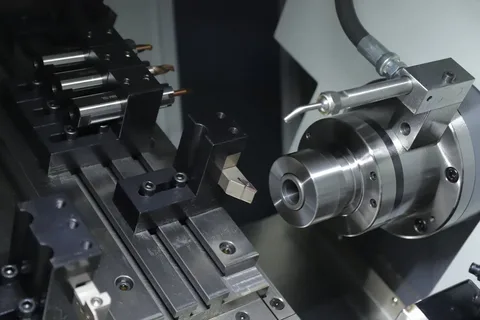
In modern manufacturing, precision is no longer optional—it is essential. Industries such as aerospace, automotive, medical devices, and electronics depend heavily on parts that fit and function with extreme accuracy. This is where cnc machining with tight tolerances plays a critical role. It ensures that every component is produced within extremely small allowable variations, leading to higher performance, safety, and reliability.
As products become more advanced and compact, the demand for precision manufacturing continues to grow. CNC (Computer Numerical Control) technology allows manufacturers to achieve consistency and accuracy that manual machining simply cannot match. Understanding its importance helps businesses improve product quality and remain competitive in demanding markets.
The Role of Precision in Modern Manufacturing
- Ensures accurate fit between components
- Reduces product failure rates
- Improves product durability and performance
- Supports high-tech industry requirements
cnc machining with tight tolerances is essential because modern products often involve complex assemblies where even the smallest deviation can cause malfunction. Precision machining ensures that every part fits perfectly with others, reducing the risk of mechanical failure.
In industries like aerospace and medical devices, even a micrometer-level error can have serious consequences. Tight tolerance machining helps manufacturers meet strict industry standards while maintaining product safety and reliability.
How CNC Technology Achieves Tight Tolerances
- Computer-controlled precision movements
- Reduced human error in production
- Advanced software for design accuracy
- Consistent repeatability in mass production
One of the biggest advantages of cnc machining with tight tolerances is the use of computerized systems that control cutting tools with extreme accuracy. Unlike manual machining, CNC machines follow programmed instructions, ensuring every cut is precise and repeatable.
This automation reduces human error and allows manufacturers to produce identical parts in large volumes. Advanced CAD/CAM software also helps engineers design and simulate parts before production, ensuring that tolerances are met from the start.
Industries That Rely on Tight Tolerance CNC Machining
- Aerospace and aviation components
- Automotive engine and transmission parts
- Medical implants and surgical tools
- Electronics and semiconductor devices
Many high-performance industries depend on cnc machining with tight tolerances to ensure product reliability. For example, aerospace components must withstand extreme conditions, requiring flawless precision to guarantee safety.
Similarly, in the medical field, implants and surgical instruments must be manufactured with exact specifications to ensure patient safety. Even minor deviations can lead to serious health risks or device failure.
Benefits of Using Tight Tolerance CNC Machining
- Higher product quality and reliability
- Reduced waste and material costs
- Improved production efficiency
- Better compatibility between components
One of the key advantages of cnc machining with tight tolerances is the significant improvement in product quality. When parts are manufactured with precision, they perform better and last longer, reducing the need for replacements or repairs.
Additionally, tighter tolerances reduce material waste since fewer defective parts are produced. This not only lowers costs but also makes the manufacturing process more environmentally friendly and efficient.
Challenges in Achieving Tight Tolerances
- High cost of advanced machinery
- Need for skilled operators and engineers
- Strict quality control requirements
- Sensitivity to environmental conditions
While cnc machining with tight tolerances offers many benefits, it also comes with challenges. The machinery required is expensive, and maintaining it requires technical expertise and regular calibration.
Temperature, vibration, and tool wear can also affect precision. Therefore, manufacturers must implement strict quality control systems to ensure consistent accuracy throughout the production process.
Conclusion
In today’s highly competitive and technology-driven world, precision manufacturing is more important than ever. cnc machining with tight tolerances has become a cornerstone of modern industry, enabling the production of highly accurate, durable, and reliable components.
From aerospace to medical devices, its applications are vast and critical. While it requires investment in technology and skilled expertise, the benefits far outweigh the challenges. As industries continue to evolve, the demand for tighter tolerances and higher precision will only increase, making CNC machining an essential part of future manufacturing innovation.