
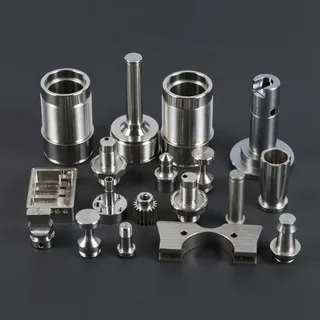
High-performance equipment demands extreme accuracy, durability, and consistency in every component used in its construction. This is where high precision CNC machining parts play a critical role. From aerospace systems to medical devices and advanced robotics, industries rely on tightly controlled manufacturing processes to achieve flawless performance under demanding conditions.
Computer Numerical Control (CNC) machining has transformed modern manufacturing by enabling the production of complex components with microscopic accuracy. When combined with precision engineering standards, it ensures that every part meets exact specifications without deviation. As industries continue to evolve, the need for reliable, efficient, and high-performing components continues to grow, making precision machining more important than ever.
Role of High Precision CNC Machining Parts in High-Performance Equipment
High-performance equipment requires components that can withstand stress, vibration, heat, and continuous operation without failure. High precision CNC machining parts ensure that every element fits perfectly within a system, reducing wear and improving efficiency. Even the smallest deviation in measurement can affect overall performance, which is why precision is essential.
These parts are widely used in systems where safety and performance cannot be compromised. Whether it is aerospace turbines or automotive engines, precision-machined components contribute directly to reliability and operational success.
Key points:
- Ensures perfect fit and alignment in complex assemblies
- Reduces mechanical wear and system failure risks
- Enhances operational efficiency and performance consistency
- Supports long-term durability of high-performance machinery
- Minimizes maintenance and downtime costs
The role of these components extends beyond simple functionality. They are fundamental to achieving innovation in engineering design, enabling machines to perform at higher speeds and greater efficiency.
Manufacturing Process and Advanced CNC Technologies
The production of high precision CNC machining parts involves advanced manufacturing processes that use computer-controlled tools to achieve exact specifications. CNC machines interpret digital design files and execute cutting, drilling, and shaping operations with extreme accuracy.
Modern CNC technology includes multi-axis machining centers, automated tool changers, and real-time monitoring systems that ensure consistency throughout production. This level of automation reduces human error and enhances repeatability across large production batches.
Key points:
- Utilizes CAD/CAM software for precise design execution
- Multi-axis machining allows complex geometries
- Automated systems reduce human intervention errors
- Real-time monitoring improves production accuracy
- Supports both prototype and mass production needs
These technologies allow manufacturers to create intricate parts that would be impossible or too costly using traditional machining methods. As a result, CNC machining is a cornerstone of modern industrial production.
Material Selection for Precision Engineering
Material selection is a critical factor in producing high precision CNC machining parts . The choice of material directly impacts strength, durability, heat resistance, and overall performance of the finished component. Common materials include stainless steel, aluminum, titanium, and engineering plastics.
Each material is selected based on the intended application. For example, aerospace components often require lightweight but strong materials like titanium, while industrial machinery may rely on hardened steel for durability.
Key points:
- Stainless steel offers corrosion resistance and strength
- Aluminum provides lightweight and thermal efficiency
- Titanium is ideal for aerospace and medical applications.
- Engineering plastics reduce weight and friction in moving parts
- Material choice affects machining speed and tool wear
Proper material selection ensures that the final product performs reliably under specific operating conditions. It also helps optimize cost efficiency and production performance.
Quality Control and Tight Tolerances in CNC Machining
One of the defining features of high precision CNC machining parts is their ability to meet extremely tight tolerances. Quality control processes ensure that every component meets exact engineering specifications before it is delivered for use.
Manufacturers use advanced inspection tools such as coordinate measuring machines (CMM), laser scanners, and digital micrometers to verify dimensions. These tools help maintain consistency and ensure that even the smallest deviation is detected and corrected.
Key points:
- Maintains extremely tight dimensional tolerances
- Uses advanced inspection and measurement tools
- Ensures consistency across large production batches
- Reduces defects and product failure rates
- Complies with international manufacturing standards
Strict quality control processes are essential in industries like aerospace, automotive, and healthcare, where failure is not an option. Precision inspection guarantees reliability and safety in every application.
Industrial Applications and Performance Benefits
High precision CNC machining parts are used across a wide range of industries due to their accuracy and reliability. From high-speed machinery to advanced medical devices, these components are essential for maintaining performance and safety.
Industries rely on these parts not only for functionality but also for improving efficiency, reducing operational costs, and extending equipment lifespan. Their versatility makes them suitable for both small-scale and large-scale production environments.
Key points:
- Used in aerospace, automotive, and defense industries
- Essential for medical devices and surgical instruments
- Supports robotics and automation systems
- Improves energy efficiency and machine performance
- Reduces long-term maintenance and replacement costs
The benefits of precision machining extend beyond individual components. They contribute to overall system optimization, allowing industries to achieve higher productivity and reliability.
Conclusion
In today’s highly competitive industrial landscape, high precision CNC machining parts are essential for ensuring the performance, safety, and efficiency of advanced equipment. Their ability to meet strict tolerances, combined with modern CNC technology and high-quality materials, makes them indispensable across multiple industries.
From aerospace engineering to medical innovation, precision machining continues to drive technological progress. As manufacturing demands grow more complex, the importance of accuracy and reliability will only increase. Investing in high-quality CNC machined components is not just a technical decision—it is a strategic advantage for long-term success.