
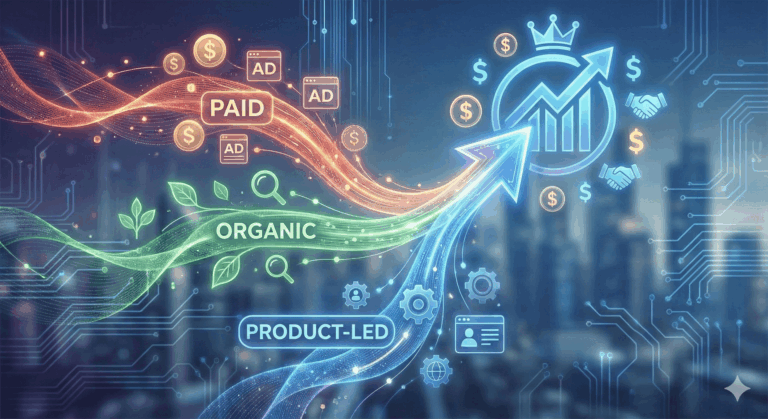
Software-as-a-Service businesses operate in a highly competitive digital environment where growth depends on more than simply attracting website traffic. SaaS companies need to generate awareness, educate potential users, convert qualified prospects, encourage product adoption, reduce customer churn, and build long-term relationships. Because customers can often compare multiple software solutions quickly, digital marketing must address different stages of the customer journey with relevant and useful communication.
Advanced SaaS marketing strategies combine data, content, automation, product insights, and customer behavior to support sustainable growth. A successful approach considers how prospects discover a product, what information they need before signing up, how they experience the onboarding process, and what encourages them to continue using the platform.
Unlike traditional product marketing, SaaS growth often continues after the initial conversion. A free trial, demonstration request, or subscription purchase is only one stage of the journey. Customer activation, retention, and expansion are equally important. Professionals exploring Digital Marketing Courses in Chennai can develop practical knowledge of SEO, content marketing, analytics, advertising, automation, and customer journey strategies relevant to modern digital businesses.
Understand the SaaS Growth Funnel
A SaaS growth funnel should not focus only on generating leads.
Different prospects have different levels of awareness and intent.
Some users may be researching a business problem. Others may already be comparing software products.
A typical SaaS journey may include:
- Awareness
- Consideration
- Trial or demonstration
- Activation
- Retention
- Expansion
Marketing strategies should address the needs of users at each stage.
A general blog article may help build awareness, while a detailed product comparison may support a prospect who is closer to making a decision.
Understanding these differences helps teams create more relevant marketing experiences.
Define a Clear Ideal Customer Profile
Advanced growth strategies begin with understanding the ideal customer.
A broad audience can make marketing messages less effective.
SaaS businesses should identify characteristics of customers who receive the greatest value from the product.
An ideal customer profile may consider:
- Industry
- Company size
- Business challenges
- Job roles
- Technology environment
Marketing campaigns can then focus on relevant audiences.
A clear profile also helps sales, product, and customer success teams align their efforts.
Customer research should continue over time because market needs can change.
Use Content to Solve Specific Problems
SaaS content should provide useful answers to customer problems.
Generic articles may attract traffic, but highly relevant content can attract users who are more likely to benefit from the product.
Content formats may include:
- Industry guides
- Technical tutorials
- Use cases
- Case studies
- Product comparisons
Each piece of content should have a clear purpose.
For example, a beginner’s guide may introduce a topic, while a technical article may help users understand how a solution works in practice.
Content should focus on usefulness rather than simply repeating product messages.
Build Topic Clusters for Organic Growth
SaaS companies often operate within specialized industries.
Topic clusters can help organize content around important customer problems.
A central page can provide a broad overview, while related articles explore specific questions.
Internal linking can connect these resources.
This structure helps users discover related information.
It can also improve the organization of a content strategy.
Instead of publishing unrelated articles, teams can develop deeper coverage of topics connected to customer needs.
Over time, useful content libraries can support both education and organic visibility.
Create High-Intent Landing Pages
Landing pages should be designed for specific audiences and purposes.
A generic homepage may not address the needs of every visitor.
High-intent landing pages can focus on:
- Specific industries
- Product features
- Business use cases
- Customer problems
The content should match the visitor’s likely intent.
For example, a user searching for a particular software capability may need more detailed information than a visitor discovering the product for the first time.
Clear messaging and relevant calls to action can help users take the next step.
Improve Product-Led Growth
Product-led growth uses the product experience as an important part of customer acquisition and conversion.
Free trials and freemium models can allow users to explore the product directly.
However, simply providing access does not guarantee adoption.
The onboarding experience should help users reach an important outcome quickly.
Teams should identify the actions associated with successful activation.
For example, users may need to create a project, connect a data source, or invite team members.
Marketing and product teams can work together to encourage these meaningful actions.
Personalize Customer Communication
SaaS audiences often have different needs.
Personalization can help provide more relevant communication.
For example, a new trial user may receive onboarding guidance, while an active customer may receive advanced feature information.
Segmentation can be based on:
- Product activity
- Customer role
- Industry
- Subscription type
Personalization should provide genuine value.
Sending more messages does not automatically improve engagement.
Relevant communication is more useful when it supports the customer’s current stage and goals.
Use Email Automation Strategically
Email automation can support the SaaS customer journey.
Automated messages can provide timely guidance without requiring manual communication for every interaction.
A structured sequence may support:
- Trial onboarding
- Feature education
- Product adoption
- Re-engagement
Email campaigns should be monitored and improved based on engagement.
If users consistently ignore certain messages, the content or timing may need adjustment.
Automation should feel helpful rather than repetitive.
The purpose is to guide users toward useful actions.
Combine SEO and Paid Advertising
SEO and paid advertising can support different SaaS growth objectives.
Organic content can attract users researching topics over time.
Paid campaigns can provide faster visibility for targeted audiences.
Search advertising may be useful for high-intent keywords.
Paid social campaigns can support awareness and audience education.
The strongest approach often combines channels.
Marketing teams can use performance data to understand which sources generate qualified users rather than focusing only on traffic volume.
A large number of visitors does not necessarily indicate strong business results.
Use Retargeting Carefully
Many website visitors do not convert during their first visit.
Retargeting can help businesses reconnect with interested users.
However, the message should match the user’s previous interaction.
A visitor who read an educational article may benefit from related content.
A trial user may need product guidance.
Relevant retargeting is generally more useful than repeatedly displaying the same promotional message.
Frequency should also be monitored.
Excessive advertising can create a negative experience.
Develop Strong Case Studies
Case studies can help prospects understand how a SaaS product is used in real business situations.
A useful case study should explain:
- The original challenge
- The approach taken
- The outcome achieved
Specific examples can provide context.
The purpose is not simply to present positive results.
Case studies should help potential customers understand whether the solution is relevant to their own situation.
Industry-specific case studies may be particularly useful for specialized SaaS products.
Focus on Customer Retention
SaaS growth depends heavily on retaining existing customers.
Acquiring new users is important, but losing customers continuously can limit overall growth.
Marketing can support retention through:
- Product education
- Useful content
- Feature updates
- Customer communication
Retention strategies should work alongside customer success and product teams.
Understanding why customers reduce usage or cancel subscriptions can help organizations improve the overall experience.
Customer feedback provides valuable information for future marketing and product decisions.
Encourage Expansion Opportunities
Existing customers may have opportunities to increase their use of a product.
Expansion may involve additional users, advanced features, or higher service levels.
These opportunities should be based on customer needs.
Product usage data can help identify customers who may benefit from additional capabilities.
Marketing messages should focus on explaining value.
An expansion strategy is more sustainable when it helps customers achieve better outcomes.
Use Analytics Beyond Website Traffic
Advanced SaaS marketing requires more than page-view data.
Teams should understand how marketing activities influence meaningful business outcomes.
Important indicators may include:
- Trial conversions
- Activation rates
- Customer acquisition cost
- Retention rates
- Customer lifetime value
Analyzing these metrics can help teams understand the full customer journey.
Marketing data should be connected with product and revenue information where possible.
This creates a more complete picture of growth performance.
Improve Conversion Through Experimentation
SaaS marketing strategies should evolve through testing.
Landing pages, calls to action, onboarding messages, and pricing communication can be reviewed and improved.
Experiments should begin with a clear question.
For example, a team may want to understand whether simplifying a signup process improves completion rates.
Changes should be measured carefully.
Continuous experimentation helps organizations avoid relying only on assumptions.
However, not every small change will produce a significant improvement.
Testing should focus on meaningful customer experiences.
Building Advanced Digital Marketing Skills
SaaS marketing requires a combination of technical and strategic skills.
Professionals need to understand customer journeys, search behavior, analytics, advertising, content, and automation.
These areas work together rather than operating as completely separate activities.
Hands-on projects can help learners analyze campaign performance, build audience segments, develop content strategies, and measure conversions.
Professionals exploring a Digital Marketing Course in Trichy can gain exposure to digital marketing concepts and practical approaches for understanding how different channels contribute to business growth.
Practical experience can help marketers make more informed decisions based on data and customer behavior.
Digital marketing for SaaS requires a long-term approach that considers the complete customer lifecycle. Growth does not end when a visitor becomes a lead or starts a free trial. Product activation, retention, and customer expansion all contribute to sustainable success.
Advanced strategies such as audience segmentation, product-led growth, content clusters, marketing automation, personalized communication, analytics, and experimentation can help SaaS businesses build more effective growth systems.
The most successful strategies focus on understanding customer needs and delivering relevant information at the right stage. Rather than relying on a single channel, SaaS organizations can combine SEO, paid advertising, content, email automation, and product insights to create a connected customer experience.
As SaaS markets continue to become more competitive, businesses that use data responsibly, understand their audiences, and continuously improve their marketing processes will be better positioned to achieve sustainable growth.