
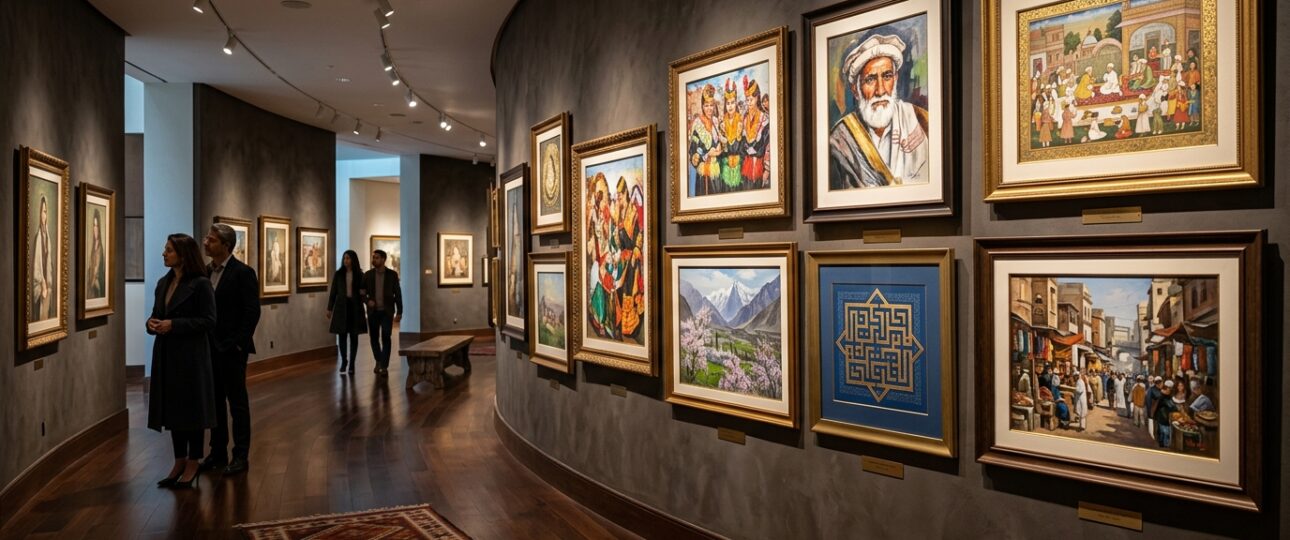
Ask someone to name a famous Pakistani artist and they’ll give you a painter. Almost always. Sculpture has always been the quieter sibling in Pakistan — respected, a little neglected, and now, slowly, finding its moment.
Why did painting win first?
Part of it is simple economics. A canvas ships flat and hangs on any wall. A sculpture is heavy, fragile, and needs a plinth, a room, and a buyer with floor space. The gallery system here was built around the easel.
There’s a cultural angle too. Figurative sculpture in public spaces has a complicated history in the region — statues get toppled, and institutions stay cautious. Abstract work fares better.
The practitioners who stuck it out
The field has always had its loyalists. Some work in bronze and metal, others in stone, wood and found material. Karachi, with its port scrap and industrial workshops, has become a natural home for metal sculptors.
A handful of Pakistani sculptors now show internationally, and their work — often large, often site-specific — travels surprisingly well. A serious sculpture can read as universal in a way a loaded figurative painting sometimes can’t.
Installation is the new edge
The most exciting energy is at the boundary where sculpture becomes installation. Young artists are building rooms you walk through, arrangements of everyday objects, light and sound pieces.
This work is harder to sell and harder to store, which tells you something: the people making it aren’t in it for a quick market. They’re making the work the country’s spaces are missing.
The public art question
Every few years the same debate returns — why does Pakistan have so little public art ? The answers are tangled: budgets, maintenance, politics, taste.
But the appetite is there. When a decent public sculpture does go up, people photograph it, argue about it, and adopt it. The demand exists. The commissioning culture just hasn’t caught up.
Where it’s heading
Art schools are training more sculptors, foundries are getting better, and a few private collectors have started buying three-dimensional work seriously for the first time.
PakistaniArt documents the medium’s progress in its coverage of Pakistani sculpture , profiling the artists and the shows. It’s the fastest way to watch a field that’s finally getting its footing.
Painting got a head start. Sculpture is making up the distance.