
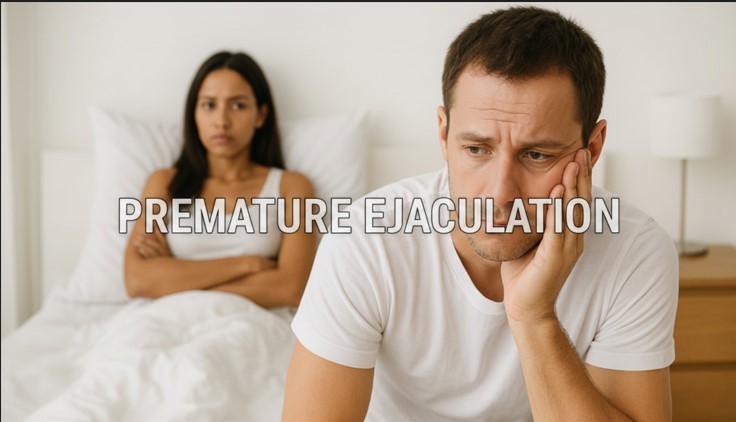
Premature ejaculation (PE) is one of the most prevalent yet misunderstood male sexual health conditions. While it is often simplified as “finishing too quickly,” the reality is far more complex—encompassing neurological processes, hormonal balance, psychological conditioning, and relationship dynamics.
This highly detailed guide goes beyond surface-level explanations to provide a deep, clinical, and practical understanding of premature ejaculation, along with evidence-based strategies for long-term control and recovery .
Understanding Ejaculation: The Science Behind It
To fully understand premature ejaculation, it’s essential to first understand how ejaculation works.
Ejaculation is a neurobiological reflex controlled by the central nervous system, involving two main phases:
1. Emission Phase
- Sperm moves from the testes to the urethra
- Controlled by the sympathetic nervous system
2. Expulsion Phase
- Rhythmic contractions push semen out of the penis
- Controlled by spinal reflexes and brain signals
Key Neurochemicals Involved:
- Serotonin (5-HT) → delays ejaculation
- Dopamine → increases arousal
- Oxytocin → involved in orgasm
- Prolactin → contributes to post-ejaculation recovery
👉 Low serotonin levels are strongly linked to rapid ejaculation , which is why many treatments target this pathway.
What Exactly is Premature Ejaculation?
Premature ejaculation is defined by three core factors:
- Short Ejaculatory Latency
(Usually under 1 minute after penetration) - Lack of Control
Inability to delay ejaculation consistently - Negative Consequences
Emotional distress, frustration, or relationship problems
Types of Premature Ejaculation (Expanded Classification)
1. Lifelong (Primary) PE
- Present from first sexual experience
- Likely biological origin
- Consistent across partners and situations
2. Acquired (Secondary) PE
- Develops after normal sexual function
- Often linked to stress, ED, or medical issues
3. Natural Variable PE
- Occasional early ejaculation
- Considered normal variation
4. Premature-like Ejaculatory Dysfunction
- Perception of early ejaculation despite normal timing
- Strongly psychological
Root Causes: A Multi-Dimensional Analysis
Premature ejaculation is rarely caused by a single issue. It is a biopsychosocial condition , meaning it involves:
1. Neurological Factors
Serotonin Receptor Sensitivity
Men with PE may have:
- Overactive 5-HT1A receptors (faster ejaculation)
- Underactive 5-HT2C receptors (reduced delay)
This imbalance reduces the brain’s ability to delay climax.
2. Psychological Factors (Deep Dive)
Performance Anxiety Loop
A powerful cycle:
- Fear of early ejaculation
- Heightened arousal
- Loss of control
- Reinforced fear
Cognitive Distortions
Men may develop harmful beliefs like:
- “I must satisfy my partner every time”
- “If I fail, I’m inadequate.”
These thoughts increase pressure and worsen PE.
Conditioning & Learned Behavior
Early experiences such as:
- Quick masturbation habits
- Fear-based sexual encounters
train the brain for rapid ejaculation.
3. Hormonal & Medical Causes
- Thyroid disorders (hyperthyroidism)
- Low testosterone (less common but relevant)
- Prostatitis (prostate inflammation)
- Diabetes and nerve damage
4. Erectile Dysfunction (ED) Connection
PE and ED often coexist:
- Fear of losing erection → rushing intercourse
- Creates a dual-performance anxiety
5. Relationship & Emotional Factors
- Lack of trust or intimacy
- Communication breakdown
- Emotional distance
These reduce relaxation, increasing performance pressure.
Symptoms: Beyond Just “Finishing Early”
Physical Symptoms
- Ejaculation within 30–60 seconds
- Minimal stimulation required
- Inability to pause or control climax
Emotional Symptoms
- Anxiety before sex
- Shame or embarrassment
- Reduced confidence
Behavioral Symptoms
- Avoiding intimacy
- Rushing intercourse
- Reduced sexual frequency
Diagnostic Approach (Clinical Perspective)
Doctors evaluate PE using:
1. IELT (Intravaginal Ejaculatory Latency Time)
- Measured time from penetration to ejaculation
2. Questionnaires
- PEDT (Premature Ejaculation Diagnostic Tool)
3. Medical Screening
- Hormone levels
- Prostate health
- Neurological function
Advanced Treatment Strategies
A multi-layered approach is most effective.
1. Behavioral Training (Core Foundation)
A. Start-Stop Method (Advanced Version)
- Stimulate until 70–80% arousal
- Stop completely
- Resume after control returns
Over time, this retrains the nervous system.
B. Edging (High-Control Training)
- Repeated cycles of near-orgasm control
- Builds strong neurological resistance
C. Sensate Focus Therapy
- Focus on touch and sensation without pressure to perform
- Reduces anxiety
2. Pelvic Floor Rehabilitation
Weak pelvic muscles reduce ejaculatory control.
Advanced Kegel Routine:
- Slow contractions (5–10 seconds)
- Fast pulses (quick contractions)
- Reverse Kegels (relaxation training)
👉 Balance between contraction and relaxation is key.
3. Pharmacological Treatments (Detailed)
SSRIs (First-Line Medical Treatment)
Work by increasing serotonin levels.
Options:
- Dapoxetine (on-demand)
- Paroxetine (daily use)
- Sertraline
Effects:
- Increase ejaculation time 2–5x
Topical Desensitizers
- Lidocaine/prilocaine sprays
- Reduce penile sensitivity
Tramadol (Selective Cases)
- Delays ejaculation
- Used under strict medical supervision
4. Psychological & Cognitive Therapy
CBT (Cognitive Behavioral Therapy)
Targets:
- Anxiety
- Negative beliefs
- Performance pressure
Mindfulness-Based Therapy
- Improves awareness of arousal levels
- Helps control escalation
5. Lifestyle Optimization (Often Overlooked)
Exercise
- Improves testosterone
- Reduces stress
Nutrition
Focus on:
- Zinc (testosterone support)
- Magnesium (nerve function)
- Omega-3 (circulation)
Sleep
Poor sleep reduces:
- Hormonal balance
- Sexual performance
6. Emerging & Advanced Treatments
Shockwave Therapy
- Improves blood flow
- Mostly used for ED but may support PE
Neuro-modulation Research
- Targeting brain pathways controlling ejaculation
Practical Techniques for Immediate Improvement
- Use thicker condoms
- Change positions (less stimulation positions)
- Slow thrusting rhythm
- Deep breathing during intercourse
- Pause-and-resume strategy
The Role of the Partner (Advanced Insight)
A partner can significantly influence recovery:
Helpful Actions:
- Removing performance pressure
- Encouraging gradual improvement
- Participating in therapy techniques
Long-Term Recovery Strategy
Phase 1: Awareness
Understand triggers and patterns
Phase 2: Control Training
Behavioral + physical exercises
Phase 3: Reinforcement
Consistency over weeks/months
Phase 4: Confidence Building
Positive experiences rebuild self-esteem
Common Mistakes That Worsen PE
- Ignoring the problem
- Relying only on medication
- Watching excessive pornography
- Avoiding communication
- Expecting instant results
Myths vs Facts
Myth: PE means weakness
Fact: It’s a neurological and psychological condition
Myth: Surgery is required
Fact: Rarely needed
Myth: It cannot be cured
Fact: Most men significantly improve
Prognosis: Can PE Be Permanently Fixed?
Yes—with the right approach:
- Mild cases → improve in weeks
- Moderate cases → months
- Severe cases → require combined therapy
Consistency is more important than speed.
Conclusion
Premature ejaculation is a complex but highly treatable condition involving the brain, body, and emotions. It is not a sign of weakness or failure—it is a medical and psychological issue that can be effectively managed with the right approach.
By combining:
- Behavioral techniques
- Medical support
- Psychological strategies
- Lifestyle improvements
men can achieve lasting control, improved confidence, and a satisfying sexual life .